A good logo can look effortless, but behind it sits a careful process. Understanding that process helps you know what to expect, what your role is, and why a thoughtful logo takes time. Here is the logo design process explained simply, from the first conversation to the final files landing in your inbox.
Step 1: Discovery and brief
Everything starts with understanding your business. A good designer asks about what you do, who your customers are, what makes you different, and what feeling you want your brand to convey. This discovery stage turns into a brief — a shared understanding of the goal. Skip it, and you are designing in the dark.
Step 2: Research
Next comes research. The designer looks at your industry, your competitors and the visual landscape you will compete in. The aim is to find a space where your logo can stand out rather than blend in, and to avoid accidentally echoing someone else’s mark. This groundwork shapes every decision that follows.
Step 3: Concepts and sketches
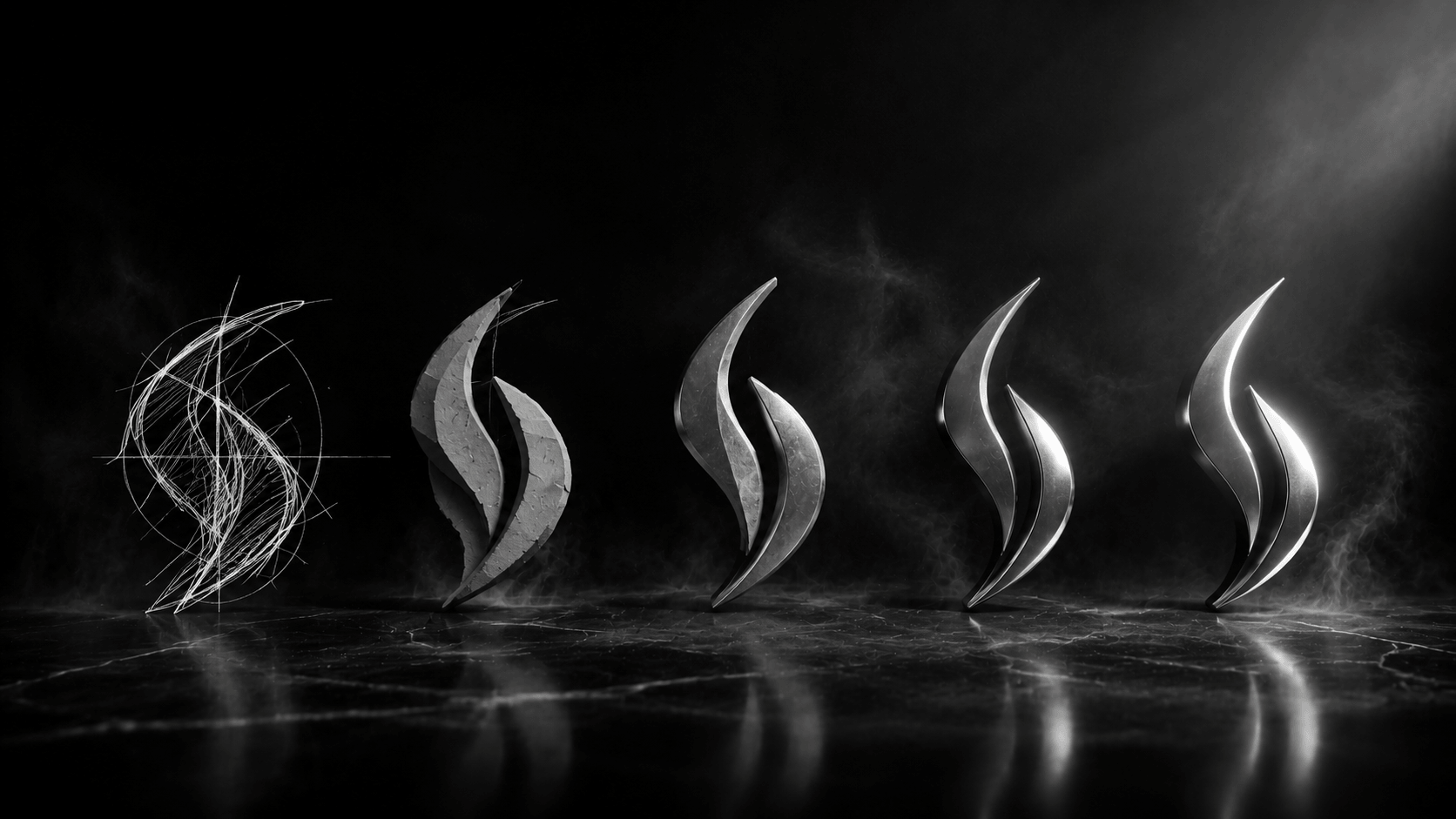
Now the visual work begins. The designer explores ideas — often starting with rough sketches before moving to the screen — and develops a few distinct directions. Each concept should express a clear idea, not just look decorative. You will usually be presented with two or three strong options to react to. A well-run expert logo design team will explain the thinking behind each one, so you are choosing with your head as well as your eye.
Step 4: Presentation and feedback
The concepts are presented to you, ideally shown in context — on a sign, a card, a screen — so you can see how each would work in real life. Your feedback at this stage is crucial. Honest reactions about what feels right and what does not help steer the design toward the strongest result.
Step 5: Refinement and revisions
Once you have chosen a direction, the designer refines it. This is where small but important adjustments happen — tweaking proportions, perfecting spacing, testing colours, and making sure the mark works at every size. A couple of revision rounds usually take the logo from good to genuinely right.
Step 6: Finalisation
With the design approved, the designer prepares the final artwork properly — building it as clean vector files, creating colour, black-and-white and reversed versions, and checking it holds up everywhere from a tiny favicon to a large banner.
Step 7: Delivery and guidelines
Finally, you receive your complete logo package. This should include:
- Editable vector source files that you own.
- Ready-to-use PNG, JPG and SVG files.
- Different versions for different backgrounds and uses.
- Simple brand guidelines so your logo stays consistent.
Why the process matters
It is tempting to want a logo overnight, but the steps exist for a reason. Each stage reduces guesswork and builds toward a mark that is original, meaningful and built to last. Rushing usually shows in the result.
How long the process takes
One of the most common questions is simply, how long will this take? The honest answer is that good logo design is rarely instant. A considered project typically runs over a couple of weeks to a month, allowing time for discovery, research, concepts, your feedback and careful refinement. Rushing usually shows in the result, so it is worth allowing breathing room rather than demanding a logo overnight. That said, the timeline depends on how quickly feedback flows. The single biggest thing you can do to keep a project on track is to respond promptly and clearly at each review stage. When client and designer move together, the process stays smooth and the final mark is all the stronger for it.
It is worth remembering that the best logos come from genuine collaboration, not a designer working in isolation. The discovery conversation, your honest reactions to the concepts, and your input during refinement all shape the result. You know your business and your customers better than anyone; the designer knows how to translate that into a strong visual mark. When both bring their part, the process feels less like a transaction and more like a partnership — and the logo is far better for it.
Knowing the process also makes you a better client — you understand when your input matters most and why certain stages take time. If you are planning a new logo and want a partner who works to a clear, collaborative process, we would be happy to guide you through every step.